Drywall Repair
Doorknob holes, furniture damage, cracked corners, failed old patches. The repair itself is the easy part — getting it to disappear under paint is the work.
Read more
Greeley combines a genuinely old core, a large rental market around the university, and steady new construction on the edges — three different kinds of drywall call in one city.
Historic homes and plaster near downtown and the university, mid-century housing through the middle, and newer subdivisions expanding west and north.
Which matters, because the repair method follows the wall. Texture density, whether the surface is drywall or plaster, and how much the structure moves seasonally all change how a patch has to be worked to stay invisible.
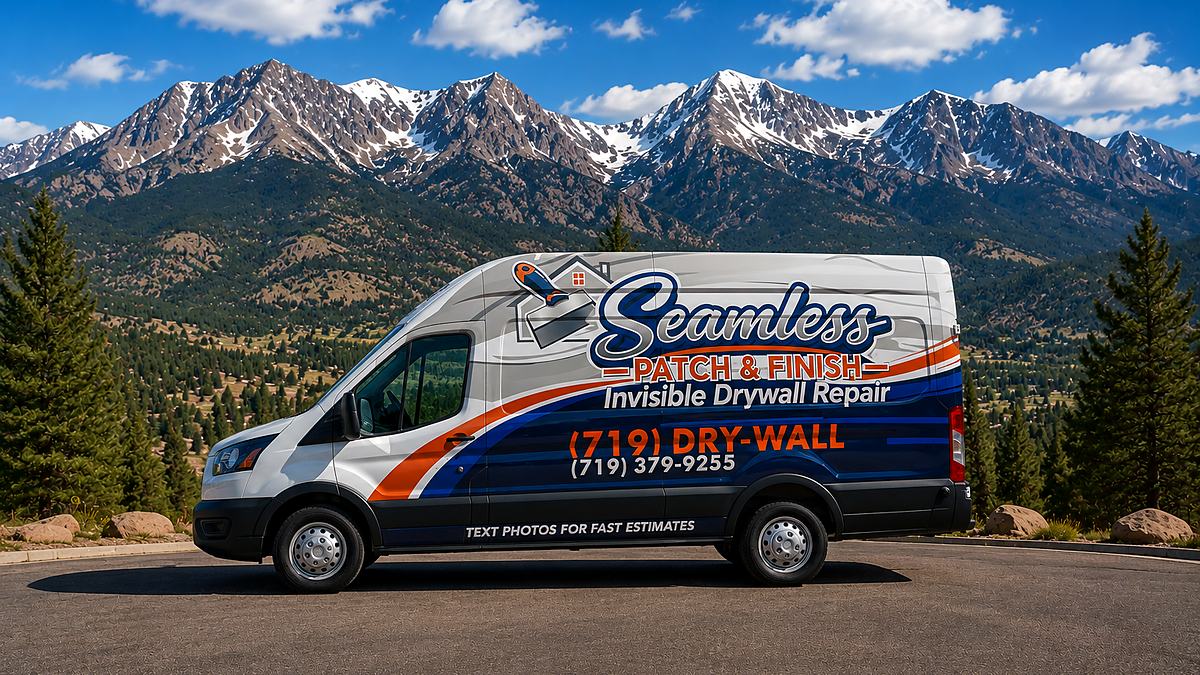
Services in Greeley
Doorknob holes, furniture damage, cracked corners, failed old patches. The repair itself is the easy part — getting it to disappear under paint is the work.
Read moreCeilings are the hardest surface to hide a repair on. Light rakes across them all day and there is nothing to break up the plane.
Read moreAccess cuts from plumbing, electrical, HVAC, and leak detection work, closed and blended back into the surface.
Read moreOrange peel, knockdown, skip trowel, stomp, Level 5 smooth. Matching what is already on the wall is the whole difference between a repair and a patch.
Read moreCut-out walls and ceilings from a leak, a supply line, or an ice dam — closed back up and finished to match.
Read moreIf it’s drywall, plaster, or a ceiling and it needs to disappear, send a photo and we’ll tell you what it is.
Text a photoWorking across Downtown Greeley, University of Northern Colorado, West Greeley and Promontory.
Questions
Greeley is the northern edge of the service area, so it is scheduled in batches rather than daily. Grouping jobs in the same trip keeps it practical — if you have multiple units or several repairs, say so and it is easier to schedule.
Yes, and that is the most efficient way to work Greeley. Give the deadline honestly when you call so we can tell you whether it fits rather than finding out halfway through.
Text photos. Take one straight-on shot of the damage, one from a few feet back showing the whole wall or ceiling, and one from the side with a light held flat against the surface so the texture is visible. Include the city and rough measurements. That is usually enough to give you a real number instead of a range.
Because texture is what your eye reads first. A patch can be perfectly flat and still announce itself if the orange peel around it is heavier, or the knockdown is flatter, or the surface is smooth where the wall has a subtle spatter. Matching it is the difference between a repair and a patch.
Text photos for a fast estimate
Straight on, a few feet back, and one from the side with a light held flat against the surface. That last one shows the texture, which is what the estimate really hinges on.